In the intensely competitive realm of modern pro-level sliding, success is no longer exclusively a product of sheer engine power or behind-the-wheel courage. Rather, it is now a complex engineering challenge that requires a scrupulous blend of choosing a time-tested vehicle platform, arming it with the highest-quality performance parts, and, most essentially, grasping its live performance on the circuit through advanced vehicle dynamics analysis tools. This definitive handbook functions as your master plan starting from the initial concept of a competition vehicle all the way to the last telemetry-optimized adjustments that elevate a strong vehicle into a predictable winner. We will delve deep into the precise engineering of chassis dynamics adjustment, demonstrating how a state-of-the-art suspension tuning tool like precise measurement hardware eliminates guesswork and provides unparalleled clarity into your vehicle's actual dynamics.
The foundation of any great drift machine is, without question, the platform itself. A select group of platforms have attained renowned reputation within the global oversteer community due to their built-in handling characteristics, durable design, and the vast ecosystem of specialist support available. Choosing the optimal platform is the initial and most important selection a builder will make. To illustrate, the BMW E36 is universally acknowledged as among the greatest all-around drift platforms of the modern era. Its almost ideal 50/50 weight distribution, combined with a driven rear axle setup and extremely reliable six-cylinder motors, forms a platform that is simultaneously forgiving for newcomers and highly competitive in the control of a professional driver. The successor of this lineage, the BMW E46 platform, builds upon these attributes with a even more developed chassis, broader stance for improved high-speed stability, and yet a greater degree of turning capability directly from the OEM. Another dominant contender in the pro circuit is the C6 generation Corvette.
This V8-powered performance car offers a particular combination of strengths to the sliding discipline, featuring a lightweight alloy chassis, a backwards-positioned drivetrain component that helps create an ideal front-to-rear mass ratio, and the immense torque of a powerful LS V8 motor. This fusion makes it an complete monster on track, capable of entering and sustaining long angles with apparently easy application of power. For those desiring outstanding performance per dollar, the Nissan 350Z excels as a excellent candidate. It is delivered from the manufacturer with a rigid platform, a decent OEM LSD, and the free-revving V6 motor that offers ample horsepower and torque for mastering and moving up in the sport. Its successor, the 370Z model, presents more advancements in chassis stiffness, suspension design, and overall engine performance, solidifying its position as a favorite choice among competitive drivers. Other historic cars that warrant mention encompass the agile Wankel-engined FC generation RX-7, the ever-present Nissan S13 240SX, the American Ford SN95, the electronic-equipped BMW E90, and the small yet incredibly fun and forgiving Mazda Miata. Every single one of these chassis gives a distinct palette of characteristics, challenges, and potentials, but they all share the fundamental elements essential to be transformed into a serious drift car.
However, selecting the correct car is merely the beginning. To release the full potential of any of these vehicles, substantial upgrades to the steering system and damping and springing systems are completely mandatory. This is where the realm of specialist drift-spec hardware becomes vital importance. The most most transformative improvement for a serious competition vehicle is the installation of a maximum-angle steering angle kit. These sophisticated assemblies, for example those engineered by industry leaders like SLR Speed, are engineered to dramatically increase the car's maximum steering angle. A OEM street car is highly constrained in how far its tires can pivot, a engineering trade-off for public road driving. In sliding, but, aggressive countersteering is continuously required to control and sustain a drift. An steering kit replaces the OEM hubs, tie rods, and potentially suspension arms with pieces that permit the wheels to achieve angles in excess of 70 or even 80 degrees, compared to a typical stock limit of around 40 to 50 degs.
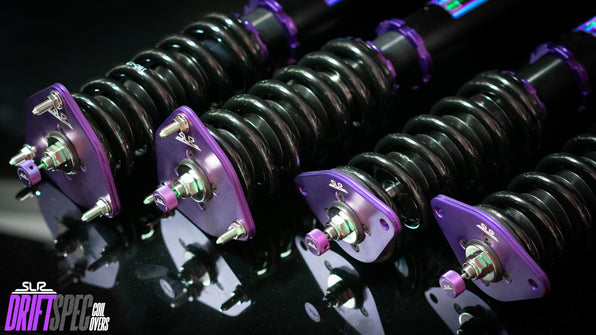
This immensely expanded lock provides the pilot with significantly more authority during a slide, enabling it to be much easier to start a oversteer moment, hold it through a sweeping turn, and change seamlessly from one side to the opposite. The difference in handling is nothing short of transformative. Coupled with a appropriately chosen steering kit is the equally vital upgrade to the vehicle's suspension. Generic or even expensive road dampers are generally not engineered for the particular and extreme needs of drifting. A drift-spec system of suspension units is paramount. These specific coilovers incorporate custom valving and spring rates that are designed for the extreme weight transfer that is inherent of aggressive driving. When a operator begins a drift, the chassis's weight is shifted forcefully to the front of the bend. Correct competition coilovers control this movement in a controllable way, permitting the vehicle to stabilize rapidly and giving the driver clear feel through the wheel and cockpit. They additionally provide exact adjustment of stance, rebound and compression stiffness, and corner weighting, which are all integral parts of optimizing the car's behavior to a specific venue or driving approach. Together, a precision-engineered drift angle kit and a properly selected system of competition adjustable dampers constitute the absolute hardware cornerstone upon which all future tuning is built.
Once the essential parts is in place, the next vital stage in the development is the detailed adjustment of the chassis's alignment. This is the world of car suspension tuning, a procedure that can appear overwhelmingly complex to the newcomer but is, in reality, the defining factor to transforming a set of capable components into a harmonious and predictable machine. The most debated aspect of alignment for oversteer is undoubtedly camber. Camber is the angle of the tire in relation to the perfectly straight axis when viewed from the front-on of the chassis. When the top of the wheel is tilted towards the chassis, this is called inward tilt. In oversteer driving, inward-leaning wheels on the front wheels is generally employed and is considered necessary. The reason is intrinsically related to vehicle dynamics.
When a chassis is turning at extreme sideways angles, the frame leans to the outer of the corner. This lean causes the outside steering tire to diminish its ideal grip area with the asphalt. By introducing negative camber, the wheel is pre-leaned to account vehicle dynamics tool for this lean. As the chassis tilts into the turn, the outside front tire flattens out with the road surface, increasing its traction at the critical moment when it is most required for steering authority. Commonly, front angles for a competition sliding vehicle vary from approximately -3 degrees to as extreme as -5 degrees or even more, contingent on the specifics of the chassis setup, tire choice, and operator feel. The rear axle wheels also employ inward lean, but the values are usually less and subtler than the front. Too much inward lean at the back can result in the chassis excessively prone to oversteer and hard to control on throttle use, as it reduces the effective grip area of the driven tires during forward power delivery. Thus, rear axle adjustments are often in the vicinity of -1 degree to -3 degrees, achieving a precise equilibrium between offering enough side grip to assist in initiating and sustaining the angle while simultaneously keeping usable grip for exiting the turn. Camber is merely one part of the more complex suspension geometry equation, which also encompasses toe angle, caster angle, and bump steer correction.
Toe setting is the direction of the tires as seen from a bird's-eye view. Toe-in means the front edges of the wheels are closer together than the rear edges, while outward toe means the reverse. For sliding, a modest amount of front toe out is frequently run to improve the turn-in handling feel, making the vehicle feel more agile and willing to begin a slide. Rear axle toe angle is usually set to zero or a very small amount of positive toe to encourage predictability under power. caster angle is the forward or aft inclination of the steering axis when observed from the lateral of the vehicle. Positive caster angle increases self-centering and high-speed solidity, and it also boosts camber gain during steering, which is highly beneficial. Tuning these parameters is a detailed interplay where a change to one setting can and will affect the other settings. The traditional process for dialing in a car's suspension geometry for drifting has for a long time been a time-consuming process of experimentation and feeling. A tuner or engineering group would introduce a adjustment based on experience, run the chassis on track, depend on the operator's drift angle kits personal feel and feedback, and then make an additional change. This process would iterate time after time until the vehicle felt "good" or the scheduled track period was exhausted. This methodology is not only incredibly slow in terms of hours and tires, fuel, and parts, but it is also deeply flawed.
Pilot feel is a notoriously unreliable data source, affected by many variables such as fatigue, changing track conditions, ambient heat, and merely the mindset of the driver on that given run. What feels "tail-happy" on one run might feel "pushing" on the following pass, leading to confusing feedback and frustrating adjustments. This traditional challenge in car suspension tuning is precisely where modern technology has made its mark to transform the methodology.
The advent and adoption of specialized suspension tuning applications has ushered in a radically different paradigm for engineering and refining professional drift machines. These platforms, exemplified by cutting-edge solutions like GripDial, work by actively recording the real-time physical movement of the car as it is being driven on the track. Unlike using driver feel, these systems acquire measurable metrics on key factors such as shock absorber movement, individual tire rotation, lateral and longitudinal g-forces, lock position, and accelerator and brake pedal position. This collected information flow is then analyzed by advanced algorithms that can graph and interpret the information in a clear format. For the first time, tuners and crews can visualize exactly what the car is doing at each point of a slide. This function transforms the complete alignment optimization process. Imagine the particular challenge of optimizing the front axle camber for a particular car. Instead of making a modification from -3 degrees to -3.5 degrees and then running several runs to try and "perceive" a improvement, a vehicle dynamics tool can give real-time and irrefutable data. The software can show visually how the wheel's grip is performing during the key phases of a slide: turn-in, sustain, and transition. It can reveal if the current value is permitting the outside front tire to keep maximum loading or if the compound is working inefficiently on its outside edge.
The tool can then suggest data-driven advice for change. Perhaps the data reveals that the tire is still stressing its outer shoulder at -3.5 degrees of camber, indicating that even more angle, say -4 degrees, might be beneficial. Alternatively, the data might reveal that the tire is not achieving optimal operating temp or that the inside shoulder is degrading excessively, which could indicate that there is overly aggressive inward lean and a modest decrease back to -3.2 degrees would be more efficient. This level of accuracy and practical insight was literally unattainable in the time of exclusively mechanical setup.
The effect of employing a comprehensive suspension tuning tool reaches far beyond just dialing in alignment. It functions as an essential coilover setup tips that is customized to your specific vehicle. When setting the shock absorber clickers on your suspension, rather than using vague advice or copying another driver's settings, you can utilize the data to observe how the vehicle is behaving in response to your adjustments. The software can show the damper movement path over a section of track, highlighting if the dampers are controlling the weight transfer properly or if they are allowing the car to bounce excessively after a transition. It can help in pinpointing challenges like excessive compression or excessive extension, permitting you to introduce data-backed decisions to spring preload, rebound/compression values, or stance. This methodology translates equally to the detailed art of corner balancing. In addition to camber angle, the software can give insight into how modifications to toe settings and caster are influencing the chassis's balance during different parts of a slide. For example, it can help you to find the optimal amount of front axle toe out for your specific angle kit setup and competition style by analyzing the speed of turn-in response and the predictability of the car at full countersteer. This turns the system an extremely powerful drift suspension tuning guide that is constantly updated by the actual dynamics of your personal car on the circuit. It moves the complete process from a subjective skill into a methodical engineering procedure.
Furthermore, the application of a system like data acquisition is in no way confined to expert teams with extensive funding. For the club-level enthusiast, it functions as an incredible educational tool. It effectively provides the builder with the insight of a full-time suspension specialist without the associated cost. It drastically shortens the development time by providing clear directions to problems that would normally take seasons of experience to understand. A builder can learn how their specific chassis responds to specific settings, gaining a more intuitive understanding of suspension theory in the endeavor. It also opens up professional chassis dynamics techniques, enabling every enthusiast with the ambition to perfect their vehicle to do so in a efficient and effective manner. This is particularly important in a sport like sliding, where tuning expertise has historically been a tightly held asset among professional teams. Now, that knowledge can be in the garage of any dedicated enthusiast.
In conclusion, the path to constructing and optimizing the perfect championship-contending drift car is a comprehensive endeavor that smoothly integrates proven mechanical knowledge with cutting-edge telemetry technology. It begins with the wise pick of a proven car, then built upon the integration of non-negotiable performance components like high-performance drift angle kits and properly valved drift-spec adjustable dampers. The journey then progresses into the intricate realm of alignment optimization, where values like camber, toe setting, and caster angle are carefully configured to complement the vehicle's new hardware and the pilot's specific technique. Finally, and what really differentiates the today's approach from the past, is the use of a sophisticated drift telemetry software. This tool eradicates the uncertainty and inefficiency of solely seat-of-the-pants tuning by delivering empirical, real-time telemetry on how the chassis is really functioning. It serves as an incredible diagnostic aid, a comprehensive drift suspension tuning guide, and a master chassis development system. In unison, this complete philosophy leads to that each and every element of the competition vehicle—from the pick of the car to the most minute tweak on the damper—is perfected coilover setup tips for peak success on the competition venue. It represents the total evolution of the art of oversteer driving, bridging physical pilot talent with data-informed vehicle setup to forge the perfect competitive vehicles attainable.